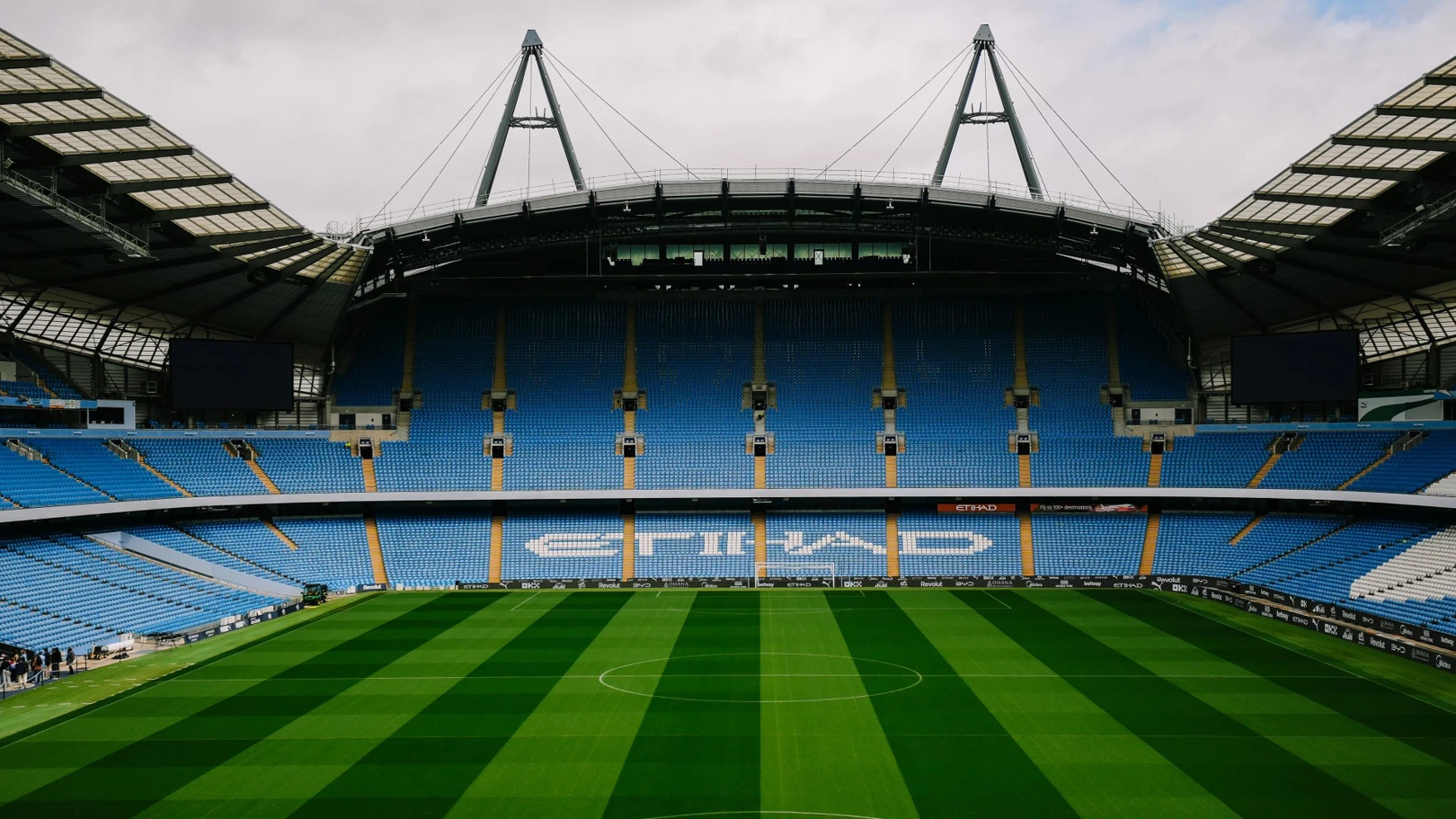
Manchester has a long and rather unfortunate history of criminality. But Manchester City have just produced a fairly compelling entry for the record books, because even by local standards, systematically breaking the rules for the best part of a decade takes some commitment.
Forget the euphemisms for a moment. Forget “financial irregularities”, “rule breaches” and the inevitable army of lawyers. From a football fan’s perspective, there is a much simpler word for deliberately creating sham contracts, inflating revenues and concealing the true state of your finances in order to spend beyond the rules everyone else was expected to follow.
Cheating.
Or, to put it even more simply: cheating bastards.
Much has already been said and written about this case by people far more clued in than I am. There are journalists who will do a much better job of explaining the case, the numbers, the offences and the potential sanctions than I ever could.
But that’s not really what I’m here to do. I’m here to write from the point of view of a football fan. One of the many fans who, like me, are now sitting back to watch the car crash unfold.
As a Leeds fan, I’ve always known the dangers of football finances. I was 10 when Leeds played Valencia in the semi-final of the Champions League back in the 00–01 season, and was naïve enough to believe that those types of nights and opportunities would come around every season.
Instead, I’ve watched as our club was ripped apart; as vultures took our crown jewels; as the stadium and training ground were sold off; as owner after owner came and went, but not before taking their own pound of flesh.
And despite the resurgence of Leeds United over the last eight years, it still hurts that we’re so constricted by financial rules. Worse, we have the audacity to be so well run that we actually follow them. We cut our cloth accordingly. We sell players when we need to. We accept that there are limits on what we can spend and how quickly we can achieve our ambitions.
Because those are the rules. Or, at least, we thought they were.
Does that make much material difference to the club, or to us as fans? Well, yes, actually. It does. It means watching Archie Gray waste some of the most important developmental years of his career at Spurs, being shuffled between multiple positions, when he should have been a cornerstone of Leeds United’s future for years to come. It means watching Georginio Rutter score goals for Brighton instead of in West Yorkshire. It means watching players with enormous potential, like Finley Gorman, leave your academy to sign for Manchester City – a club whose rise from perennial underachievers to one of the biggest names in world football was fuelled by the very financial practices they have now been found guilty of.
But it goes much deeper than individual players.
Playing by the rules has meant Leeds United putting its own future at risk. We could have spent more in the Championship. We could have gambled everything on promotion rather than accepting the financial limitations placed upon us. We could have thrown considerably more money at the squad last season in an attempt to guarantee Premier League survival. Failure in either of those seasons could have fundamentally changed the trajectory of this football club.
And it’s not as though Leeds United don’t have access to money. We have enormously wealthy owners. We have Red Bull, one of the biggest companies in world sport, plastered across the front of our shirt. If the Manchester City model was acceptable, why bother limiting ourselves to what that sponsorship is actually worth? Why not decide it’s worth another £50 million? £100 million? Why not create another commercial agreement, pump some more money through that instead, and buy the players we need?
Why not manufacture the revenue required to achieve whatever we want to achieve?

Because you can’t. Or, more accurately, you’re not supposed to be able to.
So Leeds sell Raphinha. Leeds sell Kalvin Phillips. Leeds sell Archie Gray. Leeds sell Georginio Rutter. Leeds balance the books. Leeds take the risk that doing things properly might cost us promotion, might cost us our Premier League status, and might cost us years of progress. We accept those consequences because those are the rules of the competition we have chosen to participate in.
Manchester City decided those rules didn’t apply to them.
So throw the book at them.
Give them a punishment commensurate with the scale and duration of what they have done. Send them down the divisions and see how many of their superstars fancy muddy pitches and crowds in the hundreds rather than the thousands. Because what alternative does the Premier League have now?
Other clubs have been deducted points for breaching financial rules. Clubs have missed out on Champions League qualification and European football. Players have missed out on contractual bonuses. Others have missed out on titles and winners’ medals. And at the other end of the table, clubs have been relegated while all of this has been going on.
That’s the part that shouldn’t be forgotten. Financial cheating doesn’t happen on a spreadsheet. It happens on a football pitch. Every advantage has somebody on the other side of it.
Somebody finishes fifth instead of fourth. Somebody finishes second instead of first. Somebody loses a cup final. Somebody doesn’t get their medal. Somebody doesn’t get their bonus. Somebody doesn’t get the transfer they might have earned.
And when you start talking about relegation, the consequences become devastating. Relegation doesn’t just mean three fewer Premier League teams on a fixture list. It means enormous losses in revenue. It means players being sold. It means sponsorship agreements changing. It means budgets being slashed. And, eventually, it means ordinary people losing their jobs.
That’s why whatever happens next cannot simply be about Manchester City.
It’s about every club that obeyed the rules when breaking them might have offered an easier route to success. Every owner who resisted pumping money into their club through whatever artificial means they could devise. Every manager who had to work within the squad he could afford. Every player who missed out on something. Every supporter who watched their club fail while believing, at the very least, that everyone else was playing the same game.
And don’t waste too many tears on billionaire owners arguing over lost revenues.
Save them for the supporters. Save them for the minimum-wage workers whose livelihoods depend on these football clubs. Save them for the people who followed their team into the Championship after relegation, wondering which players would leave, whether ticket prices would rise, whether staff would lose their jobs and whether they’d ever make it back.
Football’s financial rules can be infuriating. Leeds supporters know that better than most. But if clubs are expected to sacrifice players, opportunities and sometimes their entire futures in order to comply with them, then those rules have to mean something when somebody decides not to.
Otherwise, what was the fucking point?
Throw the fucking book at them.
Enjoyed this? After The Bell will always be free. If you'd like to support the site, you can buy me a coffee and cake. It's Farke's favourite. 🤍💙💛
Leeds shirts from years gone by.
From Strongbow and Whyte & Mackay to some of the absolute monstrosities we've somehow become nostalgic for. Browse classic Leeds United shirts and retro gear at 3Retro.


Never truer words said.