More Football Than Ever. So Why Am I Enjoying It Less?
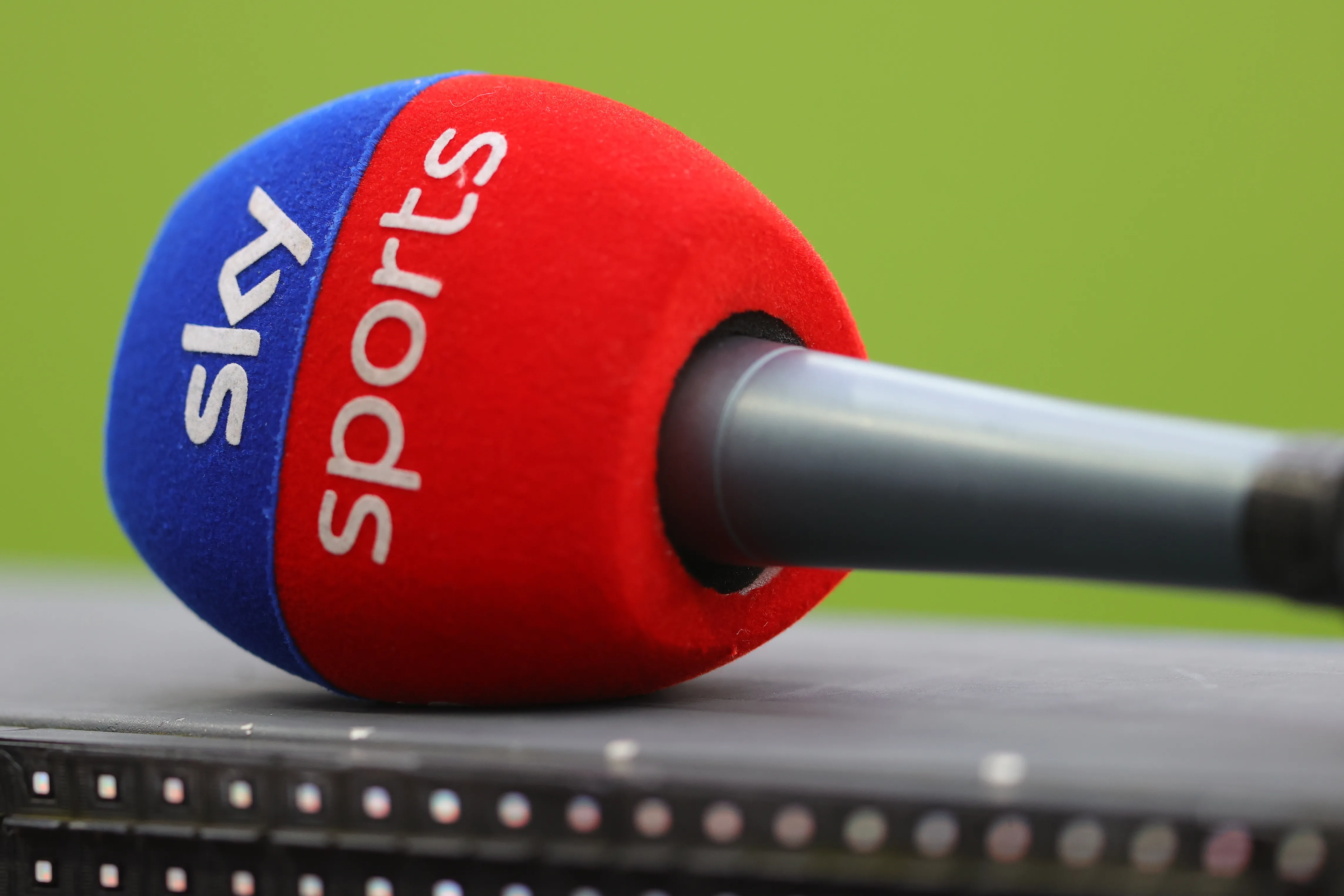
Sky Sports love to boldly boast every summer that there is more live football coming in the upcoming season than ever before. It’s 2026, and football is more accessible than ever, right? Assuming, of course, that you can afford the subscription fees. But are you really getting value for money when you’re spending a small fortune on Sky Sports, TNT Sports and whichever other packages require supporters to dig deeper into their pockets simply to enjoy their pastime? More games should mean more enjoyment. Surely?
I grew up in Ireland before relocating to the UK in 2014. Living in London meant I could finally start attending Leeds games regularly, thanks to the accessibility of the capital’s rail network and the sheer number of clubs based in and around the city. While Leeds struggled to escape the Championship, I was fortunate enough to have opportunities to watch them in person that I’d never previously enjoyed. But what about the supporters who can’t attend matches regularly? Those across the Irish Sea, or further afield, who rely heavily on television subscriptions to get their weekly fix of the club they love? For those supporters, television isn’t simply an alternative to attending matches. It’s often their only connection to the matchday experience.
And that’s where my frustration begins. Because when you’re paying increasingly substantial sums of money to watch football, surely you’re entitled to expect a certain standard of broadcasting? I’m not talking about the quality of the football itself. Sky and TNT can hardly be held responsible for a dreadful goalless draw on a miserable Sunday afternoon in Sunderland. I’m talking about everything that accompanies it. The commentary, the analysis, the discussion before and after the game. The people tasked with informing, educating and entertaining millions of paying viewers. Yet somewhere along the way, broadcasters appear to have decided that having played professional football is, in itself, sufficient qualification to explain the game to the rest of us. And I’m mystified as to why.
When Did Playing Professional Football Become A Qualification For Working In Broadcasting?
I had a free schedule on Saturday and decided that spending the afternoon watching three consecutive games of football sounded like a rather blissful way to pass the time. And so, at 12:30, I settled down to watch Manchester City take on Fulham. It was on TNT Sports. At least, I think it was TNT Sports. Judging by the commentary from Darren Fletcher and Joe Cole, you could have been forgiven for thinking I’d accidentally stumbled across Manchester City’s own television channel.
Fulham were excellent. They frustrated City, restricted their attacking opportunities and, perhaps most impressively, looked capable of causing problems themselves whenever they ventured forward. Yet you would hardly have known it from listening to the two men behind the microphones. Rather than acknowledging Fulham’s organisation, discipline or attacking ambition, Fletcher and Cole appeared determined to frame everything through the prism of Manchester City’s shortcomings. Fulham weren’t playing well; City were playing badly. Fulham weren’t frustrating their opponents; City were simply failing to perform. There was seemingly no room for the possibility that one team’s excellent performance might actually be responsible for the other’s struggles.
And the result? Ninety minutes of thoroughly miserable commentary. Not because the football was particularly poor, but because the two men tasked with describing it seemed incapable of appreciating what was unfolding in front of them. As a neutral, I had no vested interest in either side winning. I simply wanted to enjoy a game of football. Instead, I was subjected to what felt like an extended exercise in collective disappointment that Manchester City weren’t playing particularly well. It was dour, downcast and, to be frank, disgraceful.
Darren Fletcher is a truly terrible commentator. He’ll bombard viewers with stat after stat after stat, seemingly terrified of having to actually describe the football unfolding in front of him or offer anything remotely insightful off the cuff. And when the statistics finally dry up, he’ll hurriedly pass things over to his co-commentator, as though the prospect of having to fill the silence himself is simply too much to bear. Then there’s his increasingly irritating insistence on behaving as though he’s best mates with whoever happens to be sitting beside him. His constant references to “Coisty” whenever he’s paired with Ally McCoist are particularly grating. At times, you’d be forgiven for thinking you’d tuned into a private conversation or sexual fantasy rather than a professional broadcast.
Speaking of Ally McCoist, my first real memory of hearing him on commentary was during Amazon’s coverage of the Premier League. Having spent years being subjected to Andy Hinchcliffe’s relentless criticism of every player unfortunate enough to find themselves on a Championship football pitch, McCoist was a breath of fresh air. His enthusiasm was infectious, his enjoyment of the game genuine, and there was something wonderfully refreshing about listening to a co-commentator who actually seemed to enjoy watching football. Now, he makes me nauseous, as I sit rolling my eyes like an OAP reminiscing about the “good old days”. What was once a genuinely refreshing enthusiasm for the game has become something of a caricature of itself. Every passage of play seems to warrant an exaggerated reaction, every half-decent opportunity is greeted as though we’ve just witnessed something extraordinary, and the relentless joviality has become utterly exhausting. The spontaneity that once made McCoist such an enjoyable listen has disappeared, replaced by an increasingly predictable routine in which enthusiasm is no longer a natural response to the football, but an obligation to fill every available moment with noise. And when he’s paired with Darren Fletcher, the problem is only amplified. What should be a professional commentary partnership increasingly resembles two mates down the pub, desperately trying to entertain one another while a football match occasionally threatens to interrupt their conversation. Play the Ally McCoist drinking game (pictured below) and you might not make it to half-time, let alone the 3pm fixture. And if you do make it, you’ll probably end up sounding like Joe Cole.

Good grief. Watching Manchester City and Fulham on Saturday, I found myself wondering whether Cole had ever been asked to complete a sentence before being handed a microphone. He stumbled and stuttered his way through every observation, mangling old phrases and sayings while delivering one tired football cliché after another. There seemed to be no ability to articulate a thought without reaching for some well-worn expression we’ve all heard a thousand times before. It was painful listening. And while I appreciate that live broadcasting is difficult, surely the ability to communicate clearly and coherently should be a fairly fundamental requirement of the job? Cole enjoyed a distinguished playing career, but what relevance does that have when he’s struggling to explain what’s happening on a football pitch? More importantly, how does a producer sit through a performance like Saturday’s and conclude that this is an acceptable standard of commentary for a subscription service charging supporters substantial sums of money? Because I genuinely cannot fathom it.
By the time the final whistle blew at the Etihad, I was simply relieved that the ordeal was over. Ninety minutes of Darren Fletcher and Joe Cole had been more than enough punishment for one afternoon. Thankfully, Leeds were up next, and I could finally settle down to watch the team I actually cared about. A chance to enjoy some football without wanting to launch the remote through the television. And then I heard Paul Robinson’s voice on co-commentary. For fuck’s sake.
Paul Robinson once played in goal for Leeds United. Whoop-de-fucking-doo. I’m not disputing his achievements as a footballer, nor am I suggesting that his experiences at Elland Road are without value. But why does having once worn a Leeds shirt automatically qualify someone to provide expert analysis on everything happening at the club twenty years later? Robinson’s commentary is the polar opposite of Ally McCoist’s. Where McCoist seemingly cannot contain his enthusiasm, Robinson sounds as though he’s struggling to muster any at all. Dour, monotonous and painfully uninspiring, he has an extraordinary ability to make even the most entertaining passage of football sound like an inconvenience. There must surely be a happy medium between McCoist’s relentless excitement and Robinson’s apparent determination to send the viewing public to sleep.
Now let’s take a look at some of his expert opinions. After Calvert-Lewin sent a flick narrowly wide, we were reliably informed that he “won’t come much closer to scoring in the game”. An interesting observation, considering the striker had already struck the crossbar earlier in the afternoon. Perhaps Robinson had forgotten. Perhaps he was simply reaching for another tired football cliché without giving it a moment’s thought. Either way, it was another example of commentary that seemed to require considerably less thought to deliver than it did to listen to. On top of this, during the lengthy VAR check for Leeds’ penalty, Robinson spent much of the stoppage confidently informing viewers that the referee would be sent to the pitchside monitor to overturn the decision. Yet once Calvert-Lewin had tucked the penalty away to give Leeds the lead, Robinson’s assessment underwent a remarkable transformation. Suddenly, we were being told that “you can see why the ref has given it”. Apparently, the decision that had seemed so certain to be overturned only moments earlier was now perfectly understandable. What a turnaround on the pitch, and on the gantry.
And this isn’t exclusively a Robinson problem. Jermaine Beckford, Michael Bridges (and his ability to turn everything into a story about himself) and Jimmy Floyd Hasselbaink are regularly wheeled out to offer their thoughts on Leeds United, as though having played for the club automatically makes them authorities on its current affairs. It doesn’t. I have enormous respect for what these men achieved in a Leeds shirt, but their playing careers should not exempt them from the same scrutiny we’d apply to any other broadcaster. What are they actually contributing? Are they offering informed, original analysis? Are they explaining something that the average supporter might not already understand? Or are we simply expected to be grateful that somebody who once scored goals for Leeds has turned up to tell us what they think?
Undesirable #1

Perhaps the biggest criminal of all is Peter Drury. Following the end of Martin Tyler’s tenure at Sky Sports, Drury was brought on board as the broadcaster’s lead commentator. Not a bad gig, right? Especially when he doesn’t even commentate on every Super Sunday fixture. But for my money, nobody is more guilty of making the football about themselves than Peter Drury.
Listening to Drury commentate on a game of football is an utterly exhausting experience. The painfully contrived quips, the elaborate metaphors and the unnecessarily extravagant vocabulary leave me physically cringing at times. You can almost picture him sitting at home on a Saturday evening, thumbing through his thesaurus and rehearsing the supposedly profound lines he intends to shoehorn into Sunday’s broadcast. And when he finally gets the opportunity to deliver one of them, you get the distinct impression that nobody derives quite as much pleasure from it as Peter Drury himself.
Then there’s his utterly infuriating insistence on screaming the name of practically every footballer who has an attempt on goal. It feels as though Drury is desperately searching for his own “AGÜEROOOOOOOO!” moment, blissfully unaware of what made Martin Tyler’s commentary on that particular afternoon so iconic in the first place. It was spontaneous. It was a natural, instinctive reaction to an extraordinary moment in the history of English football. Tyler didn’t need to manufacture the drama because the drama was unfolding right in front of him. Drury, on the other hand, seems determined to attach the same level of historical significance to a speculative effort from twenty-five yards that sails harmlessly into Row Z.
And that’s what I find so nauseating about his commentary. Nothing feels natural. Every supposedly profound observation feels rehearsed, every expression of excitement feels manufactured, and every significant moment becomes an opportunity for Drury to indulge his own theatrical tendencies. The football itself is compelling enough without somebody desperately trying to turn every passage of play into an extract from a Shakespearean tragedy. I want to watch a game of football, Peter, not sit through your audition for the Royal Shakespeare Company.
Once upon a time, I genuinely looked forward to winding down my weekend with Super Sunday. There was something comforting about settling down on a Sunday afternoon, knowing that there were a couple of hours of Premier League football ahead of me before the inevitable return to work on Monday morning. Now, I actively find myself avoiding games because I cannot stomach the prospect of listening to Peter Drury for ninety minutes. And when a football commentator becomes the reason a football supporter chooses not to watch football, surely something has gone catastrophically wrong.
Surely We Can Do Better?
2026 is drawing to a close. We have an abundance of informed, articulate and enthusiastic football writers, journalists, analysts and content creators who would kill for an opportunity to analyse a game, discuss tactics or simply call the action. People who dedicate an extraordinary amount of their time to researching, watching and discussing football, often with little or no financial reward. Yet broadcasters seem hell-bent on throwing money at individuals who do absolutely nothing to enhance their product. Worse still, some of them actively ruin it. Mercifully, we’ve been spared any further renditions of Rio Ferdinand’s abysmal “Ballon d’Or, Ballon d’Or” shite having been shown the exit d’Or by TNT. So there is some hope for us yet.
The first time I came across George Elek and Ali Maxwell of the Not The Top 20 podcast was during Sky Sports’ coverage of the EFL. The pair were discussing the Championship ahead of a game and I was drawn in by how articulate, knowledgeable and enthusiastic they were. They spoke with a confidence that clearly stemmed from the sheer amount of football they watched and the research they undertook. They were able to discuss clubs, players and managers without resorting to silly generalisations or tired football clichés. And, perhaps most importantly, I actually felt as though I was learning something by listening to them. I subscribed to their podcast almost immediately. Neither needed to have played 300 games in the Premier League for me to take their opinions seriously. Their knowledge of the subject matter and their ability to communicate it were sufficient. Funny that, isn’t it?
How many other George Eleks and Ali Maxwells are out there? How many talented individuals are producing exceptional football content on a daily basis, only to watch somebody with a fraction of their broadcasting ability occupy a seat in a television studio because they once played for Manchester United or Liverpool?
And lest anybody think this is some sort of vendetta against former professional footballers, there are several who I thoroughly enjoy listening to. David Prutton is a brilliant host of Sky Sports’ EFL coverage. He’s articulate, personable and has a wonderful ability to immediately put his guests at ease. Crucially, he understands his role as a presenter. He’s there to facilitate discussion, to ask the right questions and to get the best out of the people sitting alongside him. He doesn’t need to dominate proceedings or remind everybody of his own playing career. There is a genuine skill in doing what Prutton does, and I don’t think he gets nearly enough credit for it.
I’ve also thoroughly enjoyed listening to Stuart Dallas whenever he’s been involved in the coverage of Leeds games. He’s well-spoken, measured in his assessments and, perhaps most impressively, appears to have actually done his homework. Despite his obvious affection for Leeds United, he’s perfectly capable of discussing the opposition, acknowledging their strengths and assessing the game from both perspectives. I don’t need a former Leeds player sitting in a television studio getting an erection every time Leeds string three passes together. I want somebody who can offer me an informed assessment of the game. Dallas does precisely that.
And then there’s Roy Keane. Apologies to my fellow Leeds supporters, but I am from Cork, after all. What I particularly appreciate about Keane is that, whether I agree with him or not, I rarely find myself questioning the sincerity of his opinions. He pulls no punches, takes no prisoners and appears entirely comfortable upsetting people in the process. In an era in which so many pundits seem desperate to manufacture a controversial opinion in the hope that it will be clipped up and plastered across social media, there’s something wonderfully refreshing about somebody who appears genuinely unbothered by whether you agree with him.
These individuals demonstrate that there is absolutely nothing wrong with employing former professional footballers. But employ them because they’re good broadcasters, not because they were footballers.
More Football, Less Enjoyment
In the summer, we’ll undoubtedly be subjected to another advertising campaign proudly informing us that there will be more live football on our television screens than ever before. Sky will boast about the number of fixtures they’re showing, TNT will promote their coverage of European football, and we’ll all be invited to part with yet more of our hard-earned money.
But I’d happily sacrifice a handful of those additional fixtures if it meant an improvement in the quality of the coverage. I’d happily listen to somebody whose name I’d never previously heard if they could offer me something insightful, informative or entertaining. I’d happily see broadcasters take a chance on some of the incredibly talented people currently writing and talking about football rather than persisting with the same tired collection of familiar faces.
I don’t need a history lesson from Darren Fletcher, a night down the pub with Ally McCoist, a lullaby from Paul Robinson or a poetry recital from Peter Drury. I want to watch football. I want to understand it better. Above all, I want to enjoy it.
And considering how much we’re paying for the privilege, I don’t think that’s an unreasonable request.
Enjoyed this? After The Bell will always be free. If you'd like to support the site, you can buy me a coffee and cake. It's Farke's favourite. 🤍💙💛
Leeds shirts from years gone by.
From Strongbow and Whyte & Mackay to some of the absolute monstrosities we've somehow become nostalgic for. Browse classic Leeds United shirts and retro gear at 3Retro.


